Nigel Farage is no longer just on a mission; he is waging a full-scale war. His latest target? The British sofa, the spare room, and the “culture of working from home.”
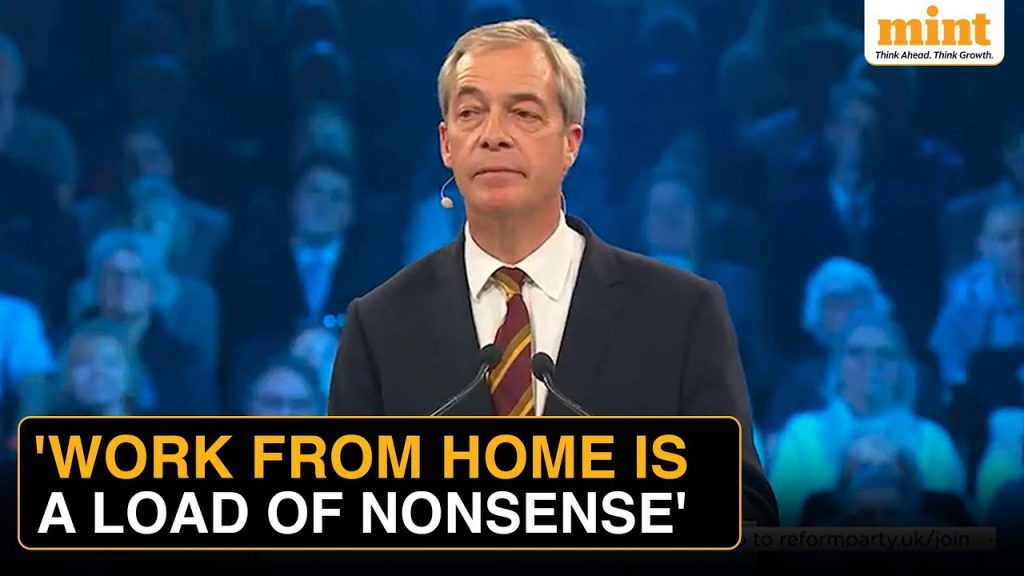
Standing before 2,000 supporters at a recent rally in Birmingham, the Reform UK leader pulled no punches. He dismissed remote work as “a load of nonsense,” arguing that productivity only thrives when we are “with other fellow human beings.”
As someone who has seen every side of this coin, from the occasional pre-COVID “home day” to the isolated grind of freelance life, and finally to the current hybrid model, Farage’s rhetoric feels like a throwback. It does however raise a serious question: If Reform UK were to win a General Election, could they actually end working from home? Or is this a battle they’ve already lost?
The Musk Blueprint: Reform’s Road map
Farage’s strategy isn’t just about “attitudinal change.” He is looking at the Elon Musk playbook, specifically the “DOGE” (Department of Government Efficiency) approach, to force a shift through three main levers:
Public Sector Mandates: Farage has been explicit. In councils where Reform has control, the message to staff was: “Work from the office or you’re gone.” At a national level, a Reform government could mandate a 100% return-to-office for millions of civil servants.
The Legislative Axe: While the current government is moving toward strengthening flexible working rights, Reform could seek to amend or repeal the Employment Rights Act and recent regulations that allow employees to request remote work.
Fiscal Pressure: From April 2026, the UK is already set to abolish WFH tax relief. A Reform government could go further, introducing “Remote Levies” or tax penalties for companies that don’t maintain a physical footprint.
The Reality Check: Where Reform Hits the Wall
Despite the fire and brimstone, the gap between political rhetoric and practical reality is massive. There are many barriers to Reform’s plans and we’ve already seen the cracks appearing in their own backyard:
The Logistical Nightmare: In 2025,. The leader admitted that Reform-led Lincolnshire County Council hit a £5 million wall they literally could not afford to bring staff back because previous administrations had already sold off the office space.
The Cost of Compliance: In West Northants, reports suggested that forcing a full return-to-office would cost the taxpayer up to £15 million in capital works. It turns out that “ending WFH” is an incredibly expensive hobby for a party that prides itself on fiscal efficiency.
Private Sector Autonomy: The UK government has very little legal authority to tell a private tech firm in Manchester or a marketing agency in London how to run their desks. As long as working from home benefits businesses by saving money on rent and helping retain talent, Farage’s “lobbying” is likely to fall on deaf ears.

The Freelancer Loophole
For the self-employed and contractors—a group I know well—the government’s reach is even shorter. Unless a freelancer is hired by a public body that insists on “office presence” as a contractual term, they are essentially immune to Farage’s crusade. With the exception of field work or site visits we can work wherever we want.
There is a final irony, too. Critics have pointed out that many Reform voters in coastal towns like Clacton – NIgel Farage’s constituency – actually benefit from working from home. It allows them to earn “London wages” while living in more affordable areas, pumping that money back into their local economies. By ending WFH, Farage might accidentally be attacking the very prosperity of his core base.
Conclusion: A War of Words
Can Reform end the culture of working from home? Most of us at least can relax because the short answer is no. They can make life difficult for civil servants, and they can certainly remove the tiny £6-a-week tax incentives that remain. They cannot easily break the thousands of private employment contracts already in place, nor can they magically rebuild the office blocks that have been converted into flats or sold off.
Working from home isn’t a “nonsense” productivity drain; for many, it’s the only way the modern economy still functions. Farage may want us back in the office, but for the millions of us who have found a balance that actually works, the genie isn’t going back into the bottle anytime soon.
Having navigated the shift from pre-pandemic office life to full-time freelancing and now a hybrid model, I’ve seen both the benefits and the barriers firsthand.
But I want to hear from you; do you think a government mandate could ever truly “kill” the home office? As a freelancer would a “Remote Levy” change how you work? Is the “water cooler” collaboration Farage speaks of worth the commute?
Let us know in the comments or you can follow us on social media and reply – Instagram, Threads, and Bluesky
Latest Blog Posts
Stay informed and inspired with our latest blog posts. Discover insights, tips, and trends across various topics.
-

Reform’s War on WFH: A Revolution or a Rhetorical Dead End?
Nigel Farage is no longer just on a mission; he is waging a full-scale war.…
-

The Cost of the Scroll: Why Your Attention is Being Stolen
Doomscrolling is quietly killing our creative process. Despite what recent polls might suggest, “scrolling” remains…
-

New Year Greetings and 5 goals for 2026
Greetings one and all, hope you had a truly fabulous festive holiday and looking forward…
